Compare
Sendvo vs PostGrid.
Choose Sendvo when operators need self-serve mail: audiences, proofs, and tracking without an API project. Choose PostGrid when you need a developer-first mail API inside your own software.
- No setup fees
- No minimum order
- No contract
- per 4×6 postcard (92 credits), Local
- $0.92
- per 6×9 postcard, Local
- $1.19
- per 6×11 postcard, Local
- $1.59
- setup fees
- $0
Sendvo vs PostGrid at a glance.
PostGrid source reviewed · October 11, 2026. PostGrid also markets dashboards and CRM integrations. Check current terms and setup requirements.
| Feature | Sendvo | PostGrid |
|---|---|---|
| Best for | Operators mailing from a browser, no engineering sprint. | Developers embedding print-and-mail in their product, CRM, or tools via API. |
| Send setup | Build an audience, design, and approve in the browser. | Depends on your workflow: API, dashboard, or integrations. |
| Engineers required | No — marketing and ops teams work in Sendvo. | Often for API builds; PostGrid also offers a dashboard and integrations. |
| Minimums | No minimum order — one piece or thousands, same rate. | Check PostGrid's current terms for minimums and pricing tiers. |
| Pricing transparency | Published addressed-mail rate card with postage, print, verification, and tracking. | Check the current PostGrid rate card and any setup costs for your workflow. |
| Creative / designer | Browser editor, templates, merge tags, and in-app proofs. | Confirm creative and proof requirements for your API or dashboard workflow. |
| Tracking | USPS tracking events for addressed mail, plus campaign history. | Confirm tracking events and reporting for your workflow and mail class. |
| Geo audiences | Map, ZIP, county, and state targeting built in. | Confirm audience options for your API, dashboard, or integration workflow. |
| Niche lists | REI and mortgage lists requested through Sendvo. | Confirm list-sourcing options with PostGrid. |
| Address checks / dedupe | Address verification; dedupe on Operator and Growth. | Confirm address checks and list-hygiene tools for your workflow. |
Design + approve
See the price before you send.
Nothing prints until you approve the proof and the price.
See how design works
Audience
Draw the area. Get the homes.
Map, ZIP, county, or state audiences. Request investor and mortgage lists through Sendvo.
How maps and targeting work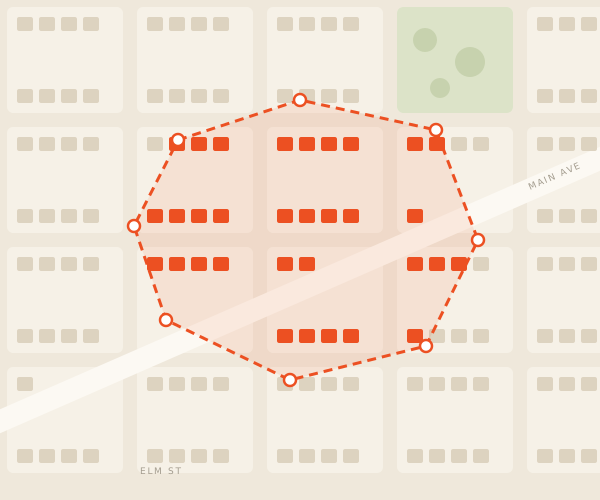 Sample campaign
PostGrid FAQ
Before you pick.
Plans: list upload, dedupe, and automated mail need Operator or Growth. Integrations and API access need Growth.
Is Sendvo or PostGrid better for non-technical operators?
Sendvo is built for operators who want to build audiences, approve proofs, and launch mail in a browser. PostGrid is developer-first and also markets dashboards for marketing teams and CRM integrations. Compare the setup your team needs.
Does PostGrid include audience building like Sendvo?
PostGrid is API-first and also offers dashboards and integrations. Confirm its audience options for your workflow. Sendvo includes map, ZIP, county, and state audience tools. REI and mortgage lists can be requested through Sendvo.
How do Sendvo and PostGrid price direct mail?
Sendvo publishes plan fees and per-piece rates on its pricing page. Addressed-mail rates include postage, print, verification, and tracking. Check PostGrid's current rate card and terms for your format, volume, and workflow.
When should I choose PostGrid over Sendvo?
Choose PostGrid when you need a developer-first print-and-mail API or its dashboard and CRM integrations fit your team. Choose Sendvo when operators need a browser workflow for audiences, creative, proofs, and addressed-mail tracking.
Operator mail. No API project.
Create a free workspace and send your first postcard.